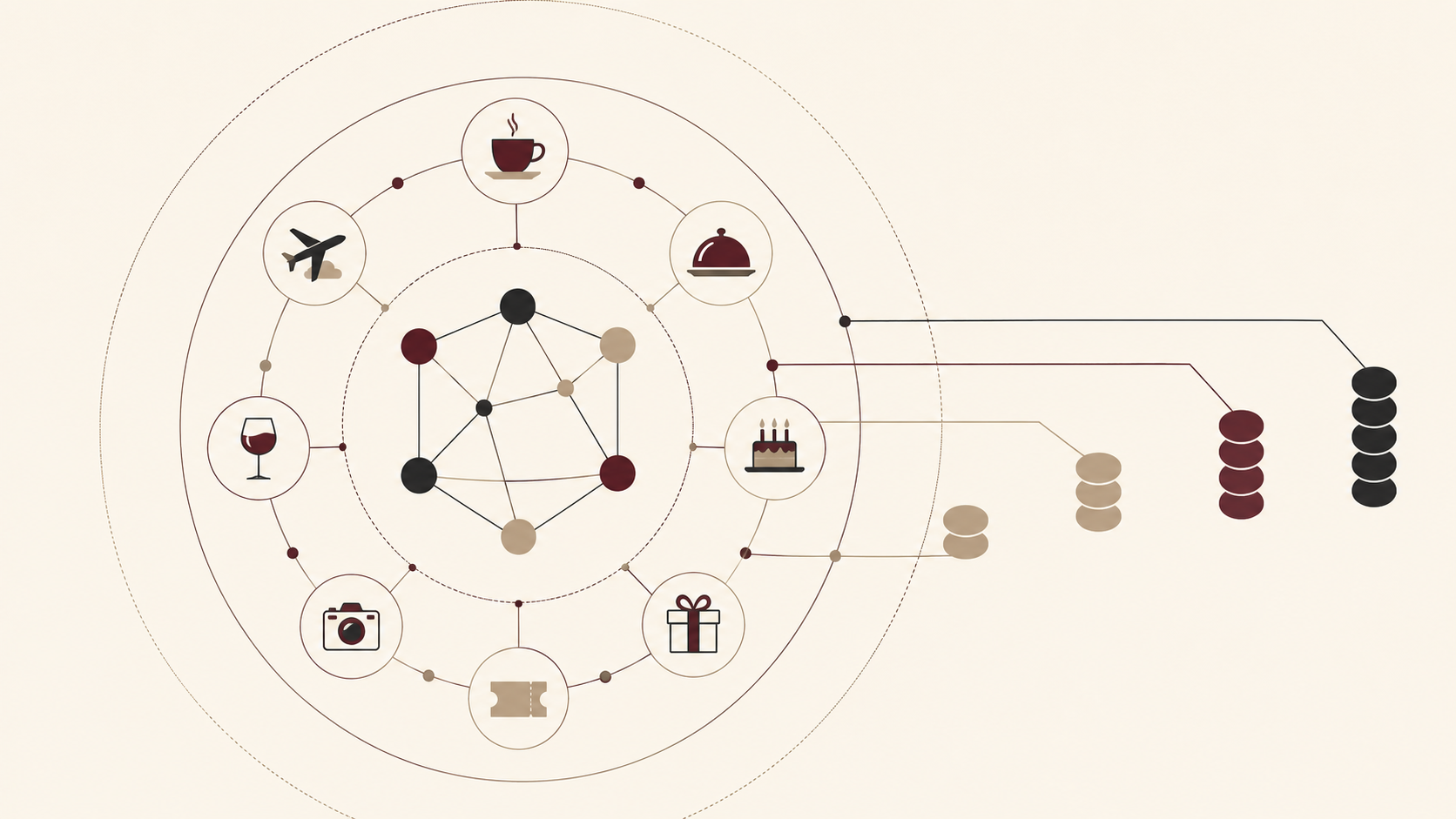
Consumer spending is often analyzed through categories such as housing, transportation, and food. Friendship spending highlights another reality: some expenses are difficult to cut because they are tied to relationships rather than products. Understanding this helps explain why consumers continue spending in certain categories even when budgets tighten.
- Rising prices are increasing the cost of maintaining friendships, a trend often called "friendflation."
- Surveys show many Gen Z consumers have reduced social spending because of higher costs.
- Restaurants, travel companies, cafés, and entertainment businesses benefit from spending tied to social relationships.
- Social spending remains resilient because consumers often view relationships as necessities rather than discretionary purchases.
Friendship Has Become a Budget Category
A coffee meetup. A birthday dinner. A weekend trip. A wedding invitation. A concert ticket.
Individually, none of these expenses may seem extraordinary. Together, they are becoming a significant part of many young adults’ budgets.
Over the past several years, rising prices have increased the cost of nearly every social activity. Restaurants are more expensive. Travel costs remain elevated. Entertainment spending has become harder to justify. Even small rituals of friendship—buying a coffee, splitting a meal, bringing a gift—now carry a higher financial burden than they once did.
As a result, a new term has emerged in discussions about personal finance: “friendflation.”
The word describes the rising cost of maintaining friendships in an era of higher living expenses and increasingly expensive social expectations.
The Hidden Cost of Staying Connected
For many young adults, friendship spending is no longer limited to occasional social outings.
Modern friendships often involve multiple layers of spending:
- Dining out
- Coffee and dessert meetups
- Birthday celebrations
- Wedding attendance
- Weekend travel
- Concerts and events
- Shared experiences documented on social media
A 2026 survey of Korean Gen Z consumers found that 93% felt burdened by the cost of meeting friends, while more than 70% said they had reduced friendship-related spending during the previous year. Meal costs were cited as the largest source of pressure, followed by coffee, desserts, alcohol, celebrations, and travel expenses.
The trend is not limited to Korea.
Surveys in the United States and the United Kingdom show similar patterns. Young adults increasingly report skipping social events, reducing dining-out spending, or reconsidering travel plans because of financial concerns.
Why Friendship Spending Is So Hard to Cut
From a purely financial perspective, friendship expenses might appear discretionary.
In reality, they are often treated more like necessities.
Housing, transportation, and food support physical needs. Social spending supports relationships.
That distinction matters because friendship is not simply consumption. It is part of how people build support systems, professional networks, romantic relationships, and a sense of belonging.
Research has repeatedly linked social connections to well-being, while economic surveys continue to show that financial stress can affect mental health and personal relationships.
As a result, many consumers cut other categories before reducing social participation entirely.
The question is no longer whether a dinner costs more than it did a few years ago. The question is whether declining the invitation risks weakening a relationship.
The Business Behind Friendship
The rise of friendship spending has also created opportunities for businesses.
Many industries now depend heavily on social consumption.
Restaurants benefit when groups gather. Travel companies profit from group trips. Event venues rely on celebrations. Concert promoters, cafés, fitness studios, and entertainment platforms increasingly position themselves as places for connection rather than simply places to purchase a product.
In other words, many companies are no longer selling food, coffee, or experiences alone.
They are selling opportunities for social interaction.
This helps explain why consumers often continue spending in these categories even when economic conditions become more difficult.
The value being purchased is not always the meal itself. It is the relationship attached to it.
Social Media Raised the Standard
Technology has made maintaining friendships easier.
It has also made them more visible.
Platforms such as Instagram, TikTok, and Snapchat constantly expose users to celebrations, trips, birthdays, weddings, and social gatherings.
As a result, social expectations can rise alongside prices.
A dinner becomes a restaurant experience. A birthday becomes a weekend event. A casual gathering becomes a destination trip.
Financial planners increasingly note that the challenge is not just inflation. It is the combination of inflation and social comparison.
A New Consumer Trade-Off
Consumer spending data show that food away from home remains a major expenditure category despite ongoing cost pressures. Americans spent nearly $4,000 annually on food away from home on average in the latest Consumer Expenditure Survey, highlighting the continued importance of dining and social consumption.
That creates a difficult trade-off for many young adults.
They are attempting to save more money while also maintaining friendships that increasingly require spending.
The result is a growing divide between financial goals and social expectations.
Some consumers are responding by meeting less frequently. Others are choosing lower-cost activities. Many are becoming more selective about which events they attend.
What to Watch
The most interesting question may not be how much friendship costs today.
It may be whether social norms begin to change.
If economic pressure remains elevated, consumers may increasingly seek lower-cost ways to spend time together. That could create new opportunities for businesses that provide affordable social experiences, community spaces, memberships, and local events.
For decades, friendship was largely considered a social issue.
Increasingly, it is becoming an economic one.
And for many young adults, the cost of staying connected is becoming a meaningful part of the monthly budget.
The most important story is not that coffee, dinners, or trips have become more expensive. It is that many businesses increasingly monetize social connection itself. As traditional community spaces decline and social activities move into paid environments, friendship is becoming a larger economic category. Companies that can offer affordable ways for people to connect may benefit even when consumers are cutting other forms of discretionary spending.
- Economic data U.S. Bureau of Labor Statistics — Consumer Expenditures 2024
- News Seoul Economic Daily — 9 in 10 Gen Z Feel Burdened by Cost of Meeting Friends, Jul. 10, 2026
- News Seoul Economic Daily — 'Friendflation' Spreads as Young People Cut Back on Meetups, Jul. 13, 2026
- News Reuters — Some Gen Z adults spend no money on dating as costs rise, BofA survey shows, Jul. 30, 2025
- News Financial Times — Are You Suffering From ‘Friendflation?’, Aug. 16, 2025