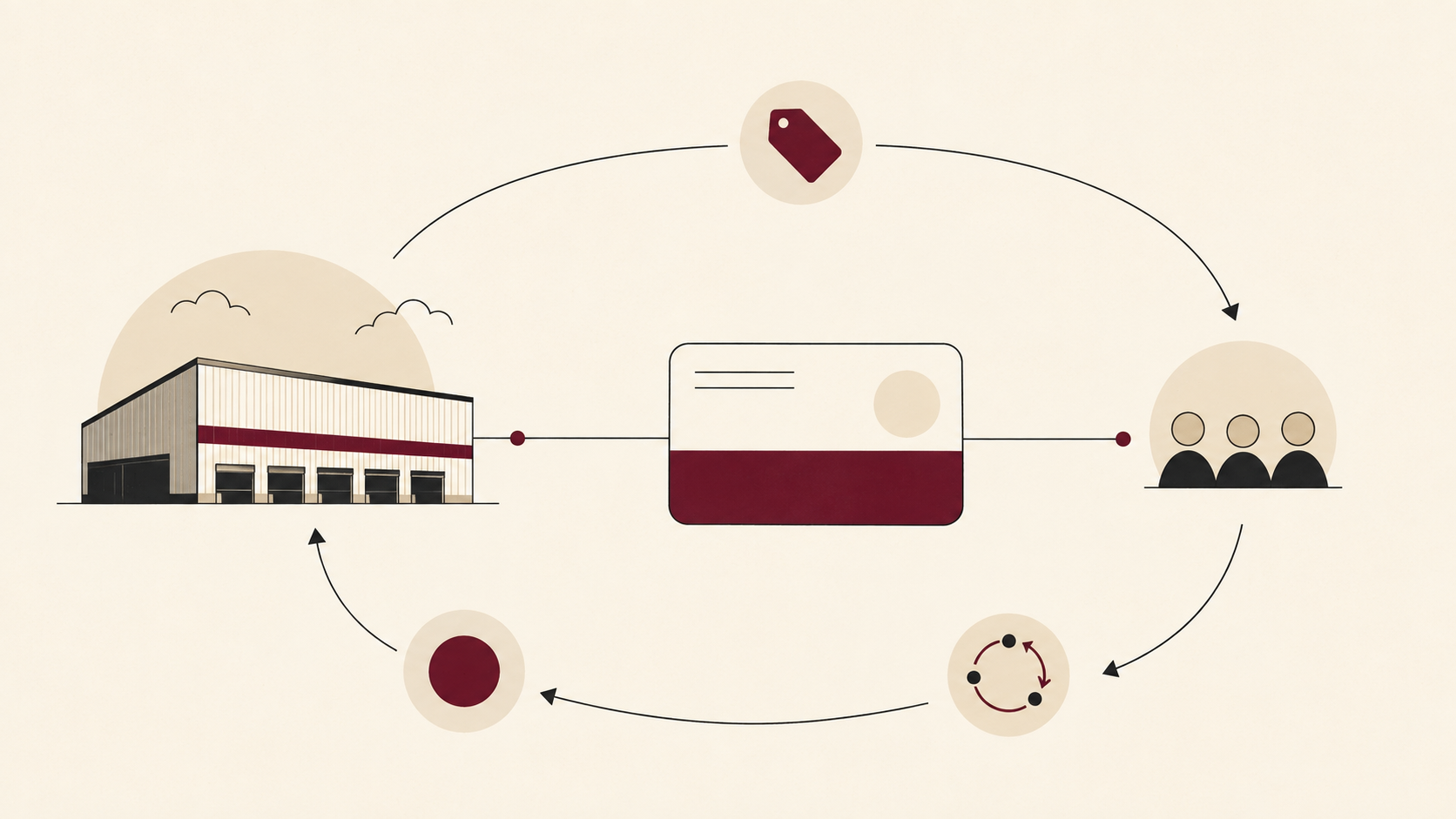
Many retailers compete on products, pricing, and promotions. Costco competes by creating a membership relationship that generates recurring revenue. The model shows how customer loyalty can become a profit center in itself rather than simply a byproduct of retail sales.
- Costco generated more than $4.8 billion in membership fee revenue during fiscal 2024.
- Global membership renewal rates remained above 90%, highlighting strong customer loyalty.
- Costco intentionally operates with low merchandise margins to support membership retention.
- The company's economics increasingly resemble a subscription business rather than a traditional retailer.
For many shoppers, Costco is a place to buy groceries, paper towels, and bulk household goods.
But financially, Costco operates very differently from a traditional retailer. The company sells products at extremely low margins and earns a significant share of its profits from something else entirely: membership fees.
That distinction helps explain why Costco has become one of the most closely watched retail businesses in the world.
The Business Behind the Warehouse
Unlike most retailers, Costco requires customers to pay before they can shop.
The company offers several membership tiers, including Gold Star and Executive memberships, giving customers access to its warehouses, website, gas stations, and other services.
As of fiscal 2024, Costco reported more than 136 million cardholders worldwide and a global membership renewal rate above 90%, according to company filings.
Those numbers matter because membership fees generate recurring revenue regardless of whether members visit a warehouse every week.
In fiscal 2024, Costco generated more than $4.8 billion in membership fee revenue. That revenue carries significantly higher margins than the products sold in stores.
Why Costco Can Sell So Cheaply
Most retailers make money primarily through merchandise markups.
Costco takes a different approach.
The company intentionally limits product markups, often capping them well below levels common across the retail industry. The goal is not to maximize profit on each item sold. Instead, the goal is to convince customers that maintaining a membership is worth the annual fee.
In effect, the products become part of the customer acquisition and retention strategy.
A shopper who believes Costco consistently offers strong value is more likely to renew their membership the following year.
That renewal is where the business model becomes powerful.
The Membership Flywheel
Costco's model can be understood as a simple flywheel:
Low prices → customer trust → membership renewals → recurring fee income → ability to maintain low prices.
The system reinforces itself.
Because membership fees contribute a large portion of operating profits, Costco can afford to keep merchandise margins relatively low. Those low prices strengthen customer loyalty, which supports future membership renewals.
The result is a business that resembles a subscription platform as much as a retailer.
Netflix sells access to content.
Amazon Prime sells access to a bundle of services.
Costco sells access to a pricing ecosystem.
Executive Members Are Especially Valuable
One of Costco's most important growth engines is its Executive Membership tier.
Executive members pay a higher annual fee in exchange for rewards based on spending.
The structure encourages customers to consolidate more purchases within Costco's ecosystem.
For the company, that means higher sales per customer and stronger retention.
According to Costco, Executive Members account for a disproportionately large share of total company sales despite representing a smaller share of total memberships.
This creates another layer of recurring value beyond the annual membership fee itself.
A Retailer With Subscription Economics
Investors often value subscription businesses differently from traditional retailers.
Recurring revenue is generally more predictable than revenue tied solely to individual transactions.
Costco's membership model gives the company characteristics commonly associated with software subscriptions, streaming platforms, and other recurring-revenue businesses.
The company's warehouses, inventory, and supply chain remain essential. But the economic engine behind the business is the annual membership relationship.
That is one reason Costco continues to attract attention even in periods when consumer spending becomes more uncertain.
What to Watch
In September 2024, Costco increased membership fees for the first time in several years, raising the standard U.S. Gold Star membership from $60 to $65 and the Executive Membership from $120 to $130.
The company's ability to raise prices while maintaining high renewal rates may be one of the clearest indicators of the strength of its business model.
If customers continue renewing despite higher fees, it suggests Costco is not merely selling products.
It is selling access to a system that customers believe is worth paying for year after year.
Many consumers think Costco's advantage comes from buying power and bulk pricing. Those factors matter, but the more important insight is that Costco monetizes trust. Customers pay an annual fee because they believe the company will continue delivering value. Once that trust is established, the membership itself becomes the product, while groceries and household goods become the mechanism that keeps the subscription active.
- Company filing Costco Wholesale Corporation Form 10-K 2024 Annual Report
- Company IR Costco Wholesale Corporation Fiscal 2024 Annual Results and Membership Statistics
- Official release Costco Wholesale Corporation Membership Fee Increase Announcement, 2024
- News Reuters — Coverage of Costco membership fee increase and membership trends, 2024