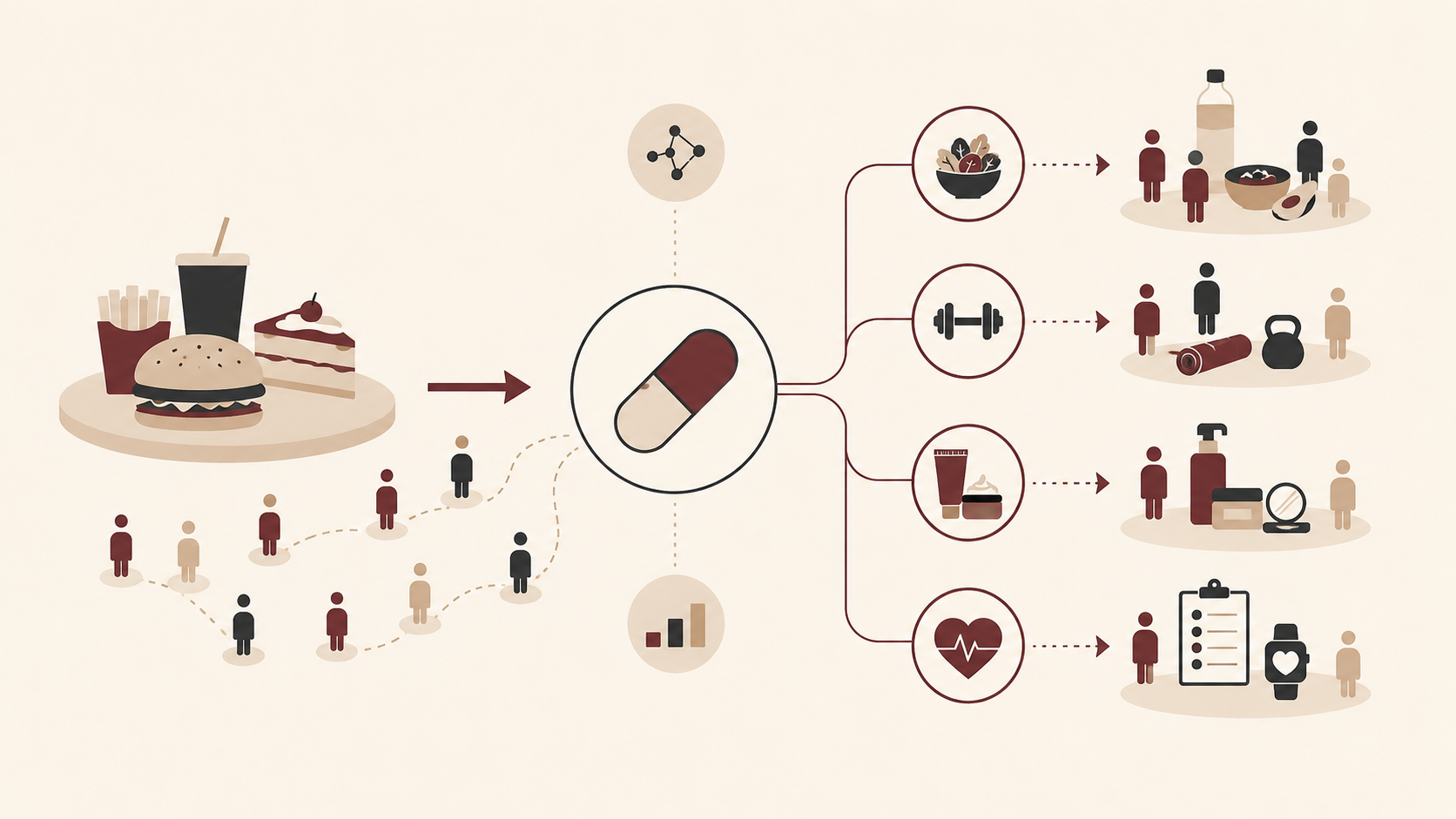
GLP-1 drugs represent more than a healthcare trend. They are changing consumer behavior in ways that affect food companies, wellness providers, fitness businesses, and beauty brands. For investors and business leaders, understanding these secondary effects may become as important as tracking the pharmaceutical companies themselves.
- GLP-1 medications are influencing consumer spending beyond healthcare.
- Food companies are adapting to growing demand for protein-focused and health-oriented products.
- Fitness, wellness, and healthcare service providers are building new offerings around GLP-1 users.
- The broader opportunity may lie in industries benefiting from lifestyle changes rather than the drugs alone.
For years, consumer companies focused on helping people eat more, snack more often, and spend more time shopping. The rise of GLP-1 weight-loss drugs is beginning to change that equation.
Medications such as Wegovy from Novo Nordisk and Zepbound from Eli Lilly were originally developed to treat obesity and related health conditions. But their influence is now extending far beyond healthcare. Millions of consumers are changing what they eat, how they shop, how often they exercise, and even which beauty and wellness products they buy.
What began as a pharmaceutical story is increasingly becoming a consumer-industry story.
A Growing Market With Millions of Users
According to Novo Nordisk and Eli Lilly, demand for GLP-1 medications has expanded rapidly over the past several years. Analysts estimate that tens of millions of people could eventually use these treatments globally if supply constraints ease and insurance coverage expands.
The drugs work by mimicking hormones that help regulate appetite and blood sugar levels. Many users report feeling full sooner and experiencing fewer food cravings.
For consumer companies, that change matters because appetite influences spending behavior across multiple categories.
Why Food Companies Are Paying Attention
One of the earliest effects appeared in the food industry.
Several consumer surveys and industry studies have found that GLP-1 users often reduce purchases of snacks, sugary foods, and large meal portions. Instead, they tend to prioritize protein-rich foods, hydration products, and nutrient-dense meals.
Major food manufacturers have acknowledged the trend in earnings calls and investor presentations. Some companies are introducing higher-protein products, portion-controlled offerings, and health-focused brands designed to appeal to consumers using weight-management medications.
The shift does not necessarily mean consumers spend less. Rather, spending may move toward different categories.
In other words, the opportunity may not disappear. It may simply change direction.
The Rise of a New Wellness Economy
The impact extends beyond food.
As users lose significant amounts of weight, many begin spending more on fitness memberships, strength training, nutritional coaching, supplements, and preventive healthcare services.
This has created opportunities for companies offering body-composition tracking, personalized nutrition, health monitoring, and digital wellness platforms.
A growing number of healthcare providers have also launched programs that combine GLP-1 prescriptions with coaching, exercise guidance, and long-term lifestyle support.
For many businesses, the medication itself is becoming only one part of a larger service ecosystem.
Beauty Companies See a New Customer Need
The beauty industry is also watching closely.
Rapid weight loss can create new consumer concerns related to skin appearance, facial volume, hair health, and body care. As a result, some dermatology clinics, aesthetic treatment providers, and beauty brands have begun tailoring products and services toward consumers undergoing significant weight-loss journeys.
Industry observers have increasingly discussed terms such as “GLP-1 beauty” and “post-weight-loss wellness,” reflecting how pharmaceutical treatments are creating demand in entirely different sectors.
The pattern highlights a broader business principle: when consumer behavior changes, adjacent industries often benefit as much as the original market.
The Business Mechanism Behind the Trend
The most important story may not be the drugs themselves.
The bigger story is how a medical innovation can reshape consumer spending patterns.
Historically, many consumer businesses optimized for volume. More snacks sold, more restaurant visits, and larger shopping baskets generally meant stronger growth.
GLP-1 medications may encourage a different model. Consumers may purchase fewer items, but spend more on products that support health, wellness, performance, and long-term outcomes.
That creates winners and losers across multiple industries.
Some companies may face weaker demand for traditional products. Others may benefit from entirely new categories that did not previously exist at scale.
What to Watch
Several questions remain unresolved.
The long-term adoption rate of GLP-1 drugs remains uncertain, particularly as pricing, insurance coverage, and manufacturing capacity continue to evolve. Consumer habits may also change over time as patients remain on or discontinue treatment.
Still, one trend is becoming increasingly clear.
GLP-1 medications are no longer affecting only pharmaceutical companies. They are influencing how consumers eat, exercise, manage their health, and spend money.
As adoption grows, businesses across the consumer economy will likely continue adapting to a customer whose priorities look very different from just a few years ago.
Many people view GLP-1 drugs as pharmaceutical products. The more interesting business story is that they may function like a new consumer platform. Just as smartphones created opportunities for app developers, GLP-1 adoption is creating demand for entirely new products and services built around healthier lifestyles, body management, and long-term wellness.
- Industry data Novo Nordisk — Wegovy product and obesity market information
- Official release Eli Lilly — Zepbound product information and obesity treatment updates
- News Reuters — Multiple reports on GLP-1 drugs' impact on food, retail, and consumer industries (2024–2026)
- Industry data KFF Health Tracking Poll and obesity medication adoption research