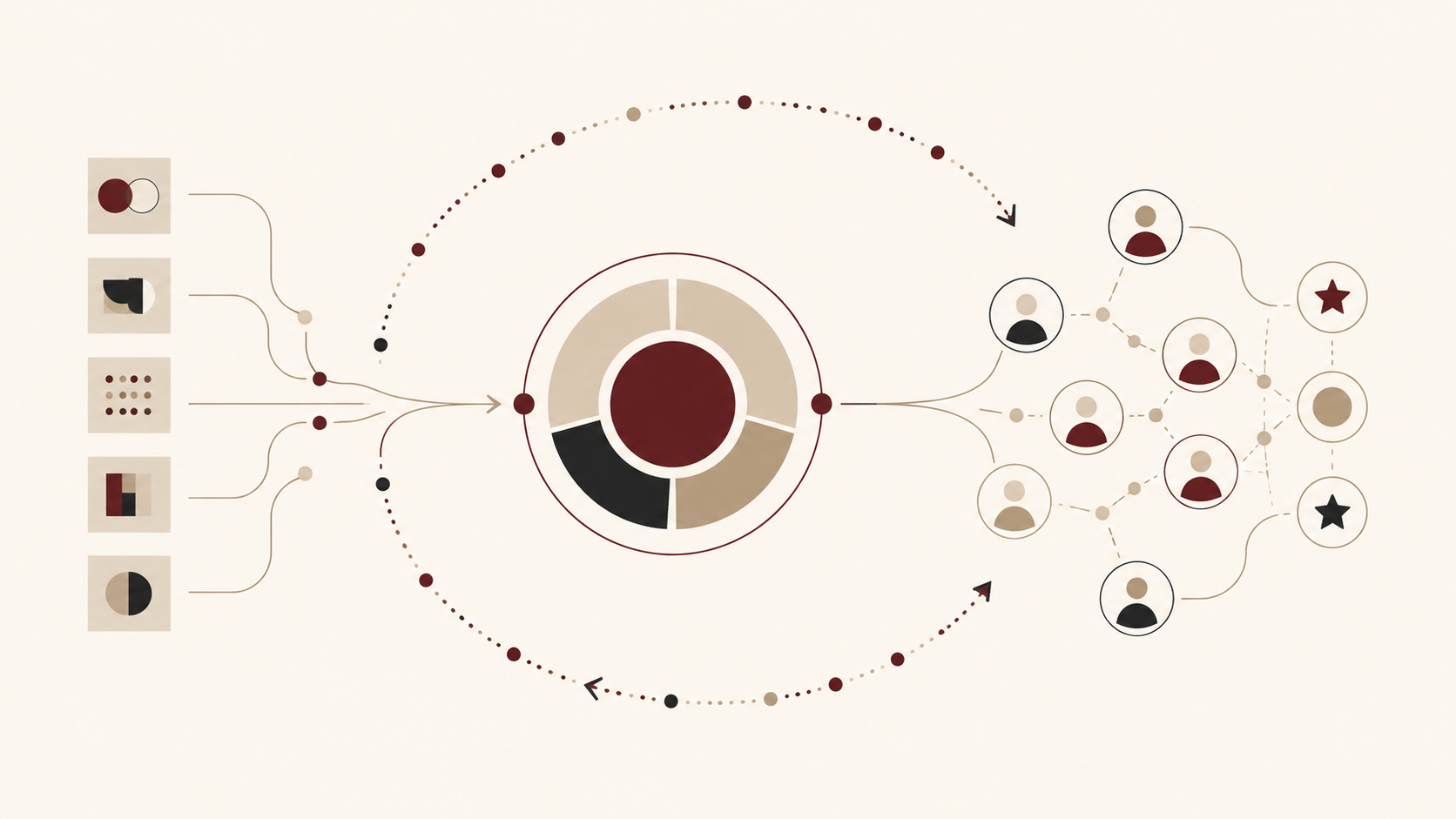
The beauty industry is becoming increasingly platform-driven. Sephora's strength is not simply product selection but its ability to connect brands and consumers through loyalty, personalization, and data. That creates a competitive advantage that is difficult for traditional retailers to replicate.
- Sephora's business extends beyond retail into a platform that connects brands, consumers, and loyalty programs.
- Beauty Insider helps drive repeat purchases and deeper customer engagement.
- Customer data improves personalization and strengthens relationships with both shoppers and beauty brands.
- The company's growth illustrates how modern retailers increasingly compete through ecosystems rather than products alone.
The Beauty Retailer That Became a Platform
Walk into a Sephora store and it may look like a traditional cosmetics retailer.
Shelves are filled with products from hundreds of beauty brands. Customers browse makeup, skincare, fragrance, and haircare products. At first glance, the business appears simple: brands make products and Sephora sells them.
But Sephora's success is increasingly tied to something else.
The company has spent years building a platform that connects beauty brands, consumers, data, and loyalty rewards into a single ecosystem. That structure helps Sephora attract shoppers, encourage repeat purchases, and generate insights that are valuable to both the retailer and the brands it carries.
In many ways, Sephora's business resembles a platform model more than a traditional store.
More Brands Create More Reasons to Visit
One of Sephora's biggest strengths is the breadth of its brand portfolio.
The retailer carries established global brands alongside emerging beauty companies. For shoppers, that means a single destination can satisfy a wide range of beauty needs.
For brands, Sephora provides access to millions of consumers both online and in stores.
This creates a network effect. More brands attract more customers. More customers make Sephora a more attractive partner for brands seeking visibility and growth.
The result is a marketplace-like dynamic where the value of the platform increases as participation grows.
Rather than relying on a handful of private-label products, Sephora benefits from being a discovery destination where consumers can compare products across categories and price points.
The Loyalty Program Is More Than a Rewards System
Sephora's Beauty Insider program is often viewed as a customer rewards initiative.
In reality, it is one of the company's most important business assets.
The program includes millions of members globally and uses a tiered structure that rewards customers based on spending levels. Members receive points, product samples, exclusive access, events, and personalized offers. According to Sephora, Beauty Insider has become a central component of the customer experience.
The rewards themselves matter, but the behavioral effect may matter more.
Customers who accumulate points have an incentive to return. Each purchase increases the value of staying within the ecosystem rather than switching to another retailer.
This turns occasional shoppers into repeat customers.
Why Customer Data Matters in Beauty
Beauty products are highly personal.
Consumers have different skin types, hair types, concerns, preferences, and spending habits. That makes customer data particularly valuable.
Every interaction inside Sephora's ecosystem can help improve personalization. Purchase history, product preferences, browsing behavior, and loyalty engagement provide signals that can help shape recommendations and marketing efforts.
For beauty brands, understanding consumer preferences is increasingly important as product launches become more frequent and competition intensifies.
The retailer sits in a powerful position between consumers and brands because it can observe demand across thousands of products and multiple categories.
In other words, Sephora does not simply sell products. It helps generate information about consumer behavior.
The Flywheel Behind Sephora's Business
The business model can be simplified into a four-step cycle:
More brands
→ More consumer choice
More consumer choice
→ More customer visits
More customer visits
→ More loyalty participation and data
More data and loyalty engagement
→ Better personalization and stronger brand partnerships
Which then attracts more brands and more consumers.
The physical store remains important, but the long-term advantage comes from the ecosystem surrounding the store.
Why This Matters Beyond Beauty
Sephora reflects a broader shift in retail.
Many of the most successful retailers are no longer competing solely on products or pricing. They are competing on ecosystems.
Membership programs, first-party customer data, exclusive partnerships, and personalized experiences are becoming strategic assets across industries.
Retailers increasingly want direct relationships with consumers because those relationships generate both revenue and information.
Sephora's model shows how a retailer can create value not only by selling products, but by becoming the platform where brands and consumers interact.
What to Watch
The next phase of competition in beauty retail may focus less on store expansion and more on customer engagement.
Artificial intelligence, personalized recommendations, loyalty-driven commerce, and exclusive brand partnerships are likely to become increasingly important.
As beauty brands seek direct relationships with consumers and retailers compete for loyalty, the companies that control customer attention and customer data may hold the strongest position.
For Sephora, that may be the real reason it continues to outperform many traditional retailers.
Many people view Sephora as a beauty retailer competing against other stores. A more useful way to think about the company is as an intermediary platform. Products bring consumers into the ecosystem, but loyalty and data keep them there. The long-term value is not just selling another lipstick or skincare product—it's owning the relationship between beauty brands and consumers.
- Company Sephora — Beauty Insider Loyalty Program Overview
- Official Company Information Sephora — Company Information and Brand Portfolio
- Industry Analysis LVMH Annual Reports and Selective Retailing Disclosures
- Industry Research Loyalty Programs in the Sharing Economy: Optimality and Competition
- Academic Research Privacy-preserving Loyalty Programs