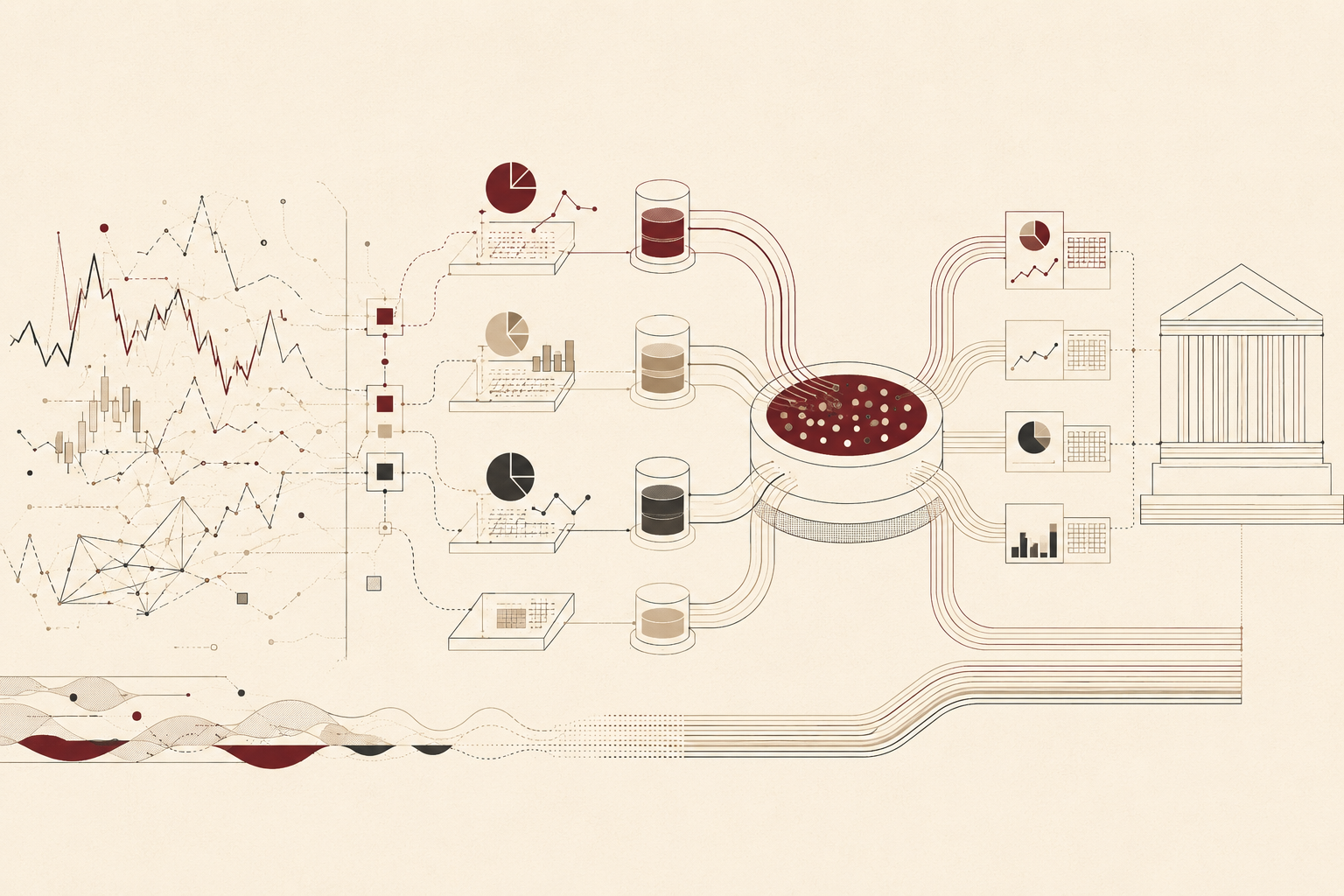
The Neos acquisition is part of a larger change in how Goldman Sachs wants to make money. Investment banking and trading can produce large revenues, but asset management provides fees tied to client assets that can be more durable across market cycles. Buying established ETF managers allows Goldman to expand that revenue base while gaining exposure to one of the faster-growing areas of investment management.
- Goldman Sachs agreed to acquire Neos Investments for up to $2.25 billion, adding roughly $30 billion in assets under management.
- The transaction is expected to increase Goldman’s active ETF assets to about $80 billion.
- The deal follows Goldman’s acquisition of Innovator Capital Management, which brought approximately $31 billion in assets under supervision when it closed in April.
- The acquisitions support Goldman’s broader strategy of expanding management fees and other more durable sources of revenue alongside investment banking and trading.
Goldman Sachs is making another acquisition in the fast-growing active ETF market.
The bank has agreed to acquire Neos Investments, an asset manager with about $30 billion under management across 19 exchange-traded funds, for up to $2.25 billion. The transaction is expected to close in early 2027.
For Goldman, the deal is about more than adding another collection of ETFs. It fits into a broader effort to make asset and wealth management a larger and more durable part of a business historically known for investment banking and trading.
That distinction matters because the way Goldman makes money is changing.
What Goldman Is Buying
Neos specializes in actively managed ETFs that use options strategies to generate income or manage risk.
That makes the company different from the traditional image of an ETF.
Many of the world’s largest ETFs are passive funds. They simply track an index such as the S&P 500 and generally charge relatively low fees. An active ETF, by contrast, has an investment strategy that makes decisions about how the portfolio is managed rather than simply replicating an index.
Neos goes a step further. Its funds use options alongside stocks and other securities to pursue specific outcomes, including generating income and reducing some downside exposure.
Those strategies have become increasingly attractive as investors look beyond simple index tracking.
Goldman Sachs Asset Management said earlier this year that active ETFs globally had reached nearly $1.8 trillion in assets by the end of 2025. More than 85% of new ETF launches in the U.S. during 2025 were active products, according to data cited by Goldman from Morningstar and its own asset-management business.
Neos gives Goldman a larger position in that shift.
Following the acquisition, Goldman is expected to oversee roughly $80 billion in active ETF assets.
Goldman Has Been Building This Business Already
Neos is not an isolated acquisition.
In April, Goldman completed its acquisition of Innovator Capital Management, an ETF manager specializing in “defined outcome” strategies designed around goals such as income generation and downside buffers.
Innovator brought approximately $31 billion in assets under supervision across 171 ETFs when the transaction closed.
The acquisition lifted Goldman Sachs Asset Management’s overall ETF assets under supervision to about $90 billion at the time.
Now Neos adds another options-focused ETF platform.
The pattern is becoming clearer: Goldman is not simply trying to offer more ETFs. It is buying specialized managers in areas where active management, options and outcome-oriented strategies can differentiate products from low-cost passive index funds.
That can matter economically because specialized active products generally give asset managers more room to earn management fees than commodity-like passive products where providers compete aggressively on price.
Why Would an Investment Bank Want More ETFs?
Goldman Sachs is still one of the world’s largest investment banks, and trading remains a major part of its business.
But those businesses can move considerably with market conditions.
Investment-banking revenue depends partly on activity such as mergers, acquisitions, IPOs and debt issuance. Trading revenue can rise or fall with client activity and market volatility.
Asset management works differently.
When an asset manager oversees client money, it can collect management fees tied to the amount of assets it manages. More assets can therefore create a recurring revenue base as long as clients remain invested.
Goldman describes management fees, together with private banking and lending and certain financing businesses, as part of its “more durable revenues.”
In its 2025 annual report, the bank said it had doubled these more durable revenues over the previous six years. Within Asset & Wealth Management, management and other fees plus private banking and lending grew at a 12% compound annual rate from 2021 through 2025.
Goldman reported $11.54 billion in management and other fees from Asset & Wealth Management in 2025, up from $10.42 billion in 2024.
That helps explain why buying an ETF manager can matter to a bank best known for billion-dollar deals and trading desks.
Every additional pool of assets potentially expands the base on which Goldman can earn fees.
The Asset-Management Business Is Getting Bigger
Goldman’s latest results show that the strategy is already becoming more important.
Asset & Wealth Management generated $4.6 billion in revenue during the second quarter of 2026, up 20% from a year earlier, according to Reuters. Goldman reported total firmwide net revenue of $20.34 billion and net earnings of $6.63 billion for the quarter.
The bank had already identified Asset & Wealth Management as one of its major long-term growth areas.
At the end of 2025, Goldman oversaw approximately $3.6 trillion in assets across its asset and wealth businesses. Its strategy includes expanding wealth management, alternatives and investment solutions while increasing the share of revenues that are less dependent on individual trading or dealmaking cycles.
The Neos acquisition fits directly into the “solutions” side of that strategy.
Instead of building every investment product internally, Goldman can acquire managers that already have assets, investment strategies and distribution relationships.
It is effectively buying both investment capabilities and an existing base of client money.
The Bigger Shift Behind the Deal
The growth of active ETFs is also changing the economics of the ETF industry itself.
ETFs became popular largely because they offered a cheap and simple way to track markets. That helped firms such as BlackRock, Vanguard and State Street build enormous passive-investing businesses.
Active ETFs are expanding what the structure can do.
Investors can now use ETFs not only to track an index but also to pursue income, hedge portions of market risk, invest in bonds or follow more complex portfolio strategies.
For asset managers, that creates an opportunity to compete on investment design rather than price alone.
Goldman’s acquisitions of Innovator and Neos suggest the bank sees specialized ETFs as a distribution vehicle for investment strategies that previously might have been offered through other types of funds or managed accounts.
The ETF, in other words, is becoming more than a passive investment product. It is increasingly becoming a wrapper through which asset managers can sell more sophisticated strategies to a broader market.
What to Watch
The Neos deal still needs to close, which is expected in early 2027.
After that, one question will be how Goldman integrates Neos alongside its existing ETF lineup and the recently acquired Innovator business.
But the larger strategy is already visible.
Goldman Sachs built its reputation around advising companies, underwriting securities and trading markets. Those businesses remain central to the firm.
At the same time, it is building another engine around managing money and collecting fees on client assets.
Buying Neos does not replace the traditional Goldman Sachs model. It makes that model less dependent on any single part of Wall Street.
And as active ETFs take a larger share of the investment market, owning the products through which investors allocate their money may become increasingly valuable.
This article is for informational purposes only and does not constitute investment advice.
The interesting part of this deal is not simply that Goldman wants more ETFs. It is where the bank is choosing to place capital. Goldman is effectively buying pools of client assets that can generate management fees over time. The shift illustrates a basic lesson in financial business models: the company arranging a transaction can earn a large fee once, while the company managing the resulting assets can potentially earn fees for years. Goldman increasingly wants exposure to both.
- News Reuters — Goldman looks to expand active-ETF presence with $2.3 billion Neos deal, Aug. 12, 2026
- Company filing Goldman Sachs — 2025 Annual Report, Mar. 20, 2026
- Official release Goldman Sachs — Goldman Sachs Completes Acquisition of Innovator Capital Management, Apr. 2, 2026
- Company research Goldman Sachs — Why Active ETFs Are Gaining Momentum as Investors Seek New Solutions, Mar. 10, 2026
- Company IR Goldman Sachs — Second Quarter 2026 Earnings Results, Jul. 14, 2026