Collectibles give retailers a behavioral tool that conventional discounts do not: an unfinished reason to return. For Woolworths, the strategy is particularly significant because it creates positive brand interactions at a time when supermarket pricing and consumer trust remain under scrutiny in Australia.
- Woolworths is offering one Disney Ooshie for every A$30 spent, with 40 characters available through Woolworths, BIG W and MILKRUN until August 25 or while stocks last.
- Strong demand has contributed to stock shortages, while swap events have extended the campaign beyond the original supermarket transaction.
- The marketing mechanism is collectibility → scarcity → repeat visits → potentially larger baskets, although Woolworths has not publicly disclosed campaign-specific sales or basket-size effects.
- The campaign gives Woolworths an emotional marketing layer as the company works against elevated consumer distrust and heightened scrutiny of supermarket pricing.
Woolworths is giving Australian shoppers a new reason to return to the supermarket. It is not another price cut.
The retailer has brought back Disney Ooshies, small collectible figures featuring characters from Disney, Pixar, Marvel and Star Wars. From July 15 through August 25, customers can receive one Ooshie for every A$30 spent at Woolworths, BIG W and through MILKRUN, while stocks last. There are 40 characters to collect, with additional figures available when shoppers buy products from participating brands.
The promotion has quickly become more than a giveaway. Strong demand has left some stores short of stock before the scheduled end of the campaign, while Woolworths has organized swap events where customers can trade duplicates.
Behind the tiny figures is a much larger retail strategy.
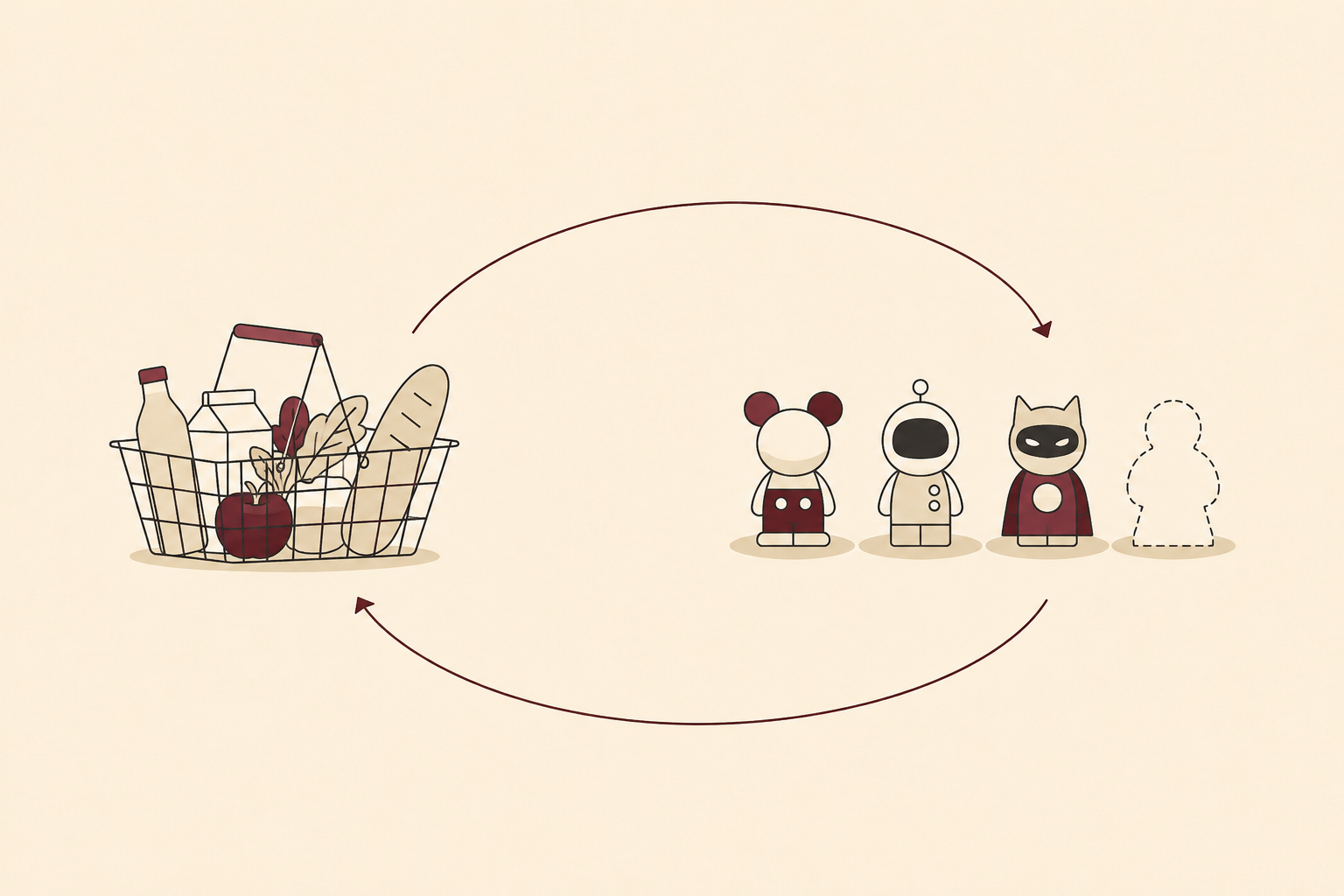
For Woolworths, Ooshies can turn a transaction customers normally want to complete efficiently into an experience they may want to repeat. The mechanism is simple: collectibility creates a goal, scarcity makes completing it harder, and every unfinished collection gives shoppers another reason to come back.
Turning a Grocery Basket Into a Game
Supermarkets have a difficult marketing problem. Most of what they sell is necessary, frequently purchased and available from competitors.
A shopper who needs milk, bread and vegetables does not necessarily feel attached to the store selling them. Price, location and convenience can matter more than the supermarket brand itself.
Collectibles change that equation by adding something unrelated to the groceries themselves.
At Woolworths, every A$30 threshold becomes another opportunity to receive an Ooshie. A customer spending A$27 has an incentive to add another item. Someone missing a particular character has a reason to return. Participating products that generate bonus Ooshies can also become more attractive than alternatives on the shelf.
That creates a potential marketing loop:
collectibility → scarcity → repeat visits → larger baskets
The important part is that Woolworths does not need to directly discount the entire basket to create the incentive. Instead, the reward sits outside the normal price comparison between supermarkets.
Woolworths has not disclosed how much the campaign has increased customer visits, average basket sizes or sales, so the commercial impact cannot yet be measured publicly. But the design of the promotion shows why collectibles remain useful to retailers: they can influence where, when and potentially how much consumers buy without changing the listed price of every product.
Scarcity Makes the Collection Work
If every Ooshie were equally easy to obtain, the collection would lose much of its power.
Consumers receive characters rather than choosing exactly which one they want, meaning duplicates are part of the experience. Completing a 40-character collection can therefore require repeated purchases, exchanges with other collectors or both.
The scarcity has also become visible outside Woolworths stores. Some figures have appeared on resale platforms at unusually high asking prices, while swap events have drawn shoppers trying to complete their sets.
That secondary activity matters even if the extreme resale prices do not represent realistic market values. It turns a supermarket promotion into something consumers discuss, trade and search for beyond the checkout.
The product is small. The engagement around it can be much larger.
Woolworths Is Selling More Than Value
The timing is particularly important for Woolworths.
Australian supermarkets have spent the past several years under intense scrutiny over grocery prices and promotional practices. From July 1, 2026, new rules also prohibit very large supermarket retailers — currently Woolworths and Coles — from engaging in excessive grocery pricing, with the Australian Competition and Consumer Commission responsible for monitoring compliance.
At the same time, Woolworths is dealing with a broader brand problem. Roy Morgan's trust rankings for the 12 months to March 2026 placed Woolworths as Australia's fourth most distrusted brand, although its ranking had improved from earlier periods.
That makes the Ooshies campaign more interesting than a normal loyalty promotion.
Price remains central to grocery retail, especially when household budgets are under pressure. A collectible cannot solve concerns about grocery costs, nor can it substitute for competitive pricing. But it can change the emotional context in which consumers interact with a supermarket.
Instead of asking shoppers to think only about what they paid, Woolworths is giving families something to search for, exchange and talk about.
Disney also brings something Woolworths cannot create as quickly on its own: established characters with existing emotional value. A Toy Story or Marvel character arrives with years of recognition before it reaches the supermarket checkout.
For a retailer trying to strengthen its relationship with customers, borrowing some of that affinity can be valuable.
From Promotion to Brand Experience
This is where Ooshies differ from a conventional coupon.
A discount usually creates a straightforward exchange: spend less money on a product today. Once the discount disappears, much of the incentive disappears with it.
Collectibles can continue working after the transaction.
They sit in homes, get traded with friends and create conversations between shoppers. Woolworths has extended that effect by holding swap events, turning a checkout reward into a small community around the collection.
The strategy also stretches across the group. This year's Ooshies are available not only at Woolworths supermarkets but also at BIG W and through MILKRUN. That gives Woolworths Group several consumer businesses a shared promotional system and creates more places where customers can continue collecting.
The collectible, in other words, becomes a reason to move through the company's broader retail ecosystem.
Can a Collectible Change How Consumers Feel About a Supermarket?
That is the bigger test.
Ooshies can generate excitement. They can make a grocery trip more memorable. And scarcity can create urgency that an ordinary supermarket promotion struggles to match.
But engagement and trust are not the same thing.
A shopper may visit Woolworths repeatedly to complete a collection while still questioning supermarket prices. A successful promotion can create positive interactions with the brand, but rebuilding trust requires those interactions to be supported by the fundamentals of retail: price, service, availability and transparency.
That distinction makes the Ooshies campaign a useful brand case.
Woolworths is not simply giving away miniature Disney characters. It is using collectibility to add emotion to an industry where consumers increasingly think about value. If that emotion changes shopping behavior, the real value of an Ooshie is not the piece of recycled material in a customer's hand.
It is the next trip to the store.
The most interesting part of Ooshies is not the toy. It is how Woolworths has attached an unfinished objective to an otherwise finished transaction. Normally, a grocery trip ends at checkout. A collection keeps the consumer relationship open: another character is missing, another visit becomes useful, and another purchase can move the customer closer to completion. That is a simple lesson in behavioral marketing — sometimes the strongest incentive to buy again is not a cheaper product, but an incomplete experience.
- Official release Woolworths Group — Disney OOSHIES back at Woolworths, July 6, 2026
- Industry research Roy Morgan — Bunnings is Australia’s most trusted brand; OpenAI enters the top 20 most distrusted brands for the first time, June 2026
- Government / Regulatory ACCC — ACCC to monitor supermarket compliance with new excessive pricing prohibition, June 26, 2026
- News The Australian — Woolworths bets on Ooshies craze to win back customer trust, Aug. 13, 2026