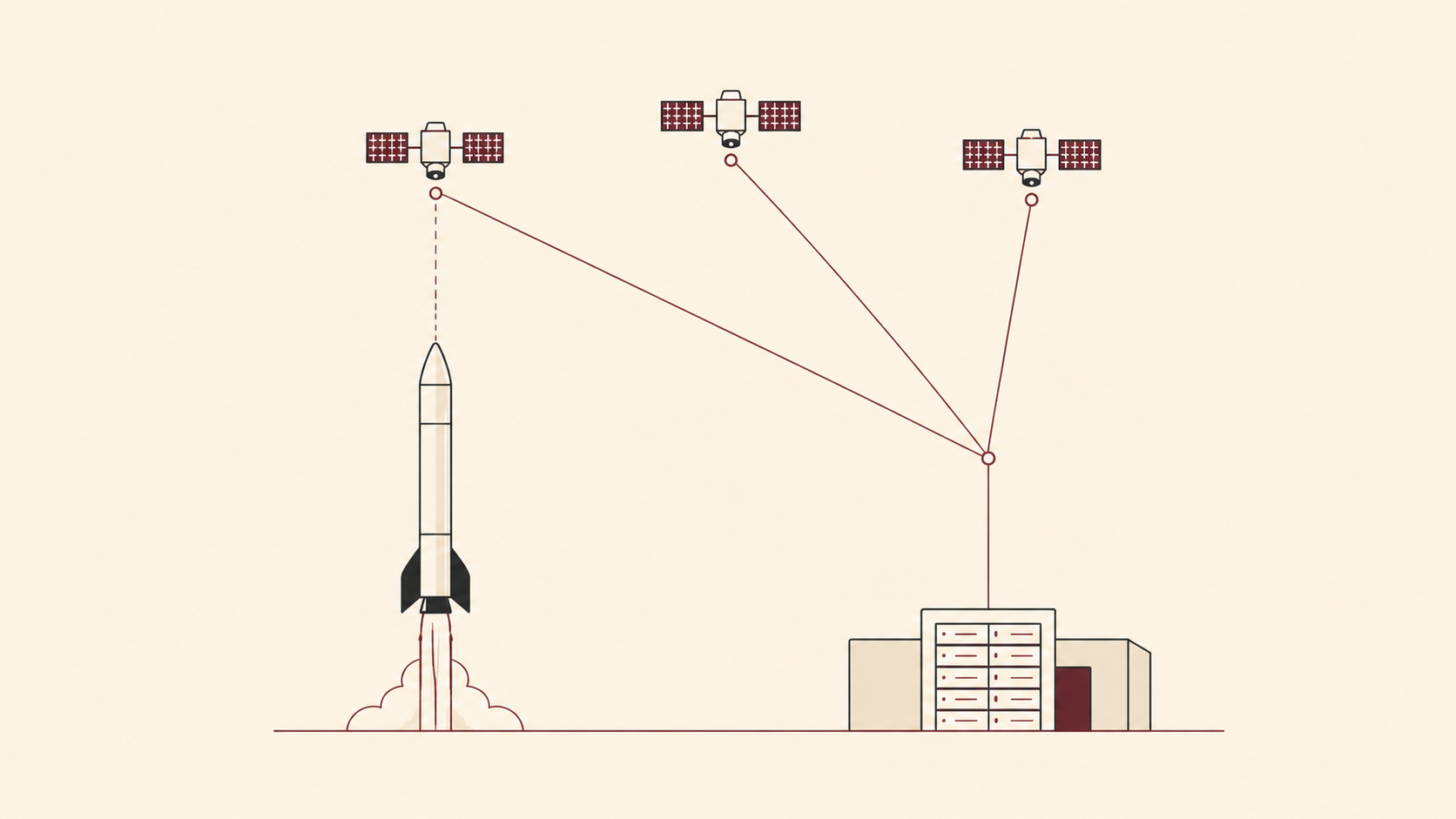
SpaceX’s earnings reveal a business model that is becoming more vertically integrated than its identity as a rocket maker suggests. Launch capability helps build Starlink, Starlink creates recurring connectivity revenue, and SpaceX is now betting heavily that the same infrastructure can support AI-related businesses. The question is whether that integration can justify the enormous capital required to build the next layer.
- SpaceX reported $7.81 billion in second-quarter revenue, up 92% year over year.
- Connectivity generated $4.29 billion in Q2 revenue, with Starlink reaching 12 million subscribers by the end of June.
- SpaceX increasingly uses its launch capability as infrastructure for building Starlink rather than relying only on selling launches to outside customers.
- AI adds another potential business layer, but roughly $15.8 billion in Q2 AI-related capital spending shows how expensive that expansion could be.
SpaceX built its reputation by launching rockets. Its first earnings report as a public company suggests that rockets are becoming only one part of a much larger business.
The company reported $7.81 billion in second-quarter revenue, up 92% from a year earlier. But the more revealing number was where that revenue came from. SpaceX’s Connectivity segment, primarily built around Starlink, generated $4.29 billion, making it the company’s largest business by revenue. The AI segment generated about $2.56 billion, while the Space segment contributed $962 million.
That mix changes the simplest way to understand SpaceX. It is still a launch company, but it is increasingly also a satellite internet provider, communications infrastructure operator and AI company.
Starlink Is Becoming the Economic Center
The shift did not begin this quarter.
In 2025, SpaceX generated $18.67 billion in consolidated revenue. Connectivity accounted for $11.39 billion of that total, compared with $4.09 billion from the Space segment. Connectivity revenue had grown nearly 50% from the previous year.
The second quarter pushed that trend further.
Starlink ended June with 12 million subscribers, roughly double its subscriber count from a year earlier and up from 10.3 million at the end of March. Its subscriber base is expanding even as the company reaches markets where customers generally pay less for broadband.
That distinction matters because Starlink changes the economics of SpaceX.
A rocket launch is largely a transaction. A customer pays SpaceX to send a payload into orbit. Starlink is different. After the satellite network is deployed, customers continue paying for access to the service.
In other words, SpaceX has built a recurring connectivity business on top of the launch infrastructure it already controls.
The Rocket Business Builds the Infrastructure
This does not mean rockets are becoming less important.
Instead, their role inside SpaceX is changing.
The company can design and manufacture satellites, launch them on its own Falcon rockets and operate the resulting Starlink network. That vertical integration means SpaceX does not need to purchase launch capacity from another provider every time it expands its constellation.
In 2025, Falcon completed 165 launches, up from 134 in 2024. Yet SpaceX said revenue from external Launch Services remained relatively flat. A growing share of launch activity was instead tied to deploying the company’s own Starlink satellites.
That creates an unusual business loop:
launch capability → satellite deployment → connectivity network → recurring service revenue
The rocket is no longer only the product being sold. It is also infrastructure that helps SpaceX build another business.
Starship could extend that model. SpaceX is spending heavily on the next-generation vehicle because substantially greater payload capacity and launch frequency could lower the cost of deploying larger satellite networks and other orbital infrastructure.
But that investment remains expensive. The Space segment recorded a $662 million operating loss in the first quarter while funding $930 million of Starship research and development.
AI Adds Another Layer
The newest piece of the structure is artificial intelligence.
SpaceX acquired xAI earlier this year, combining its space and connectivity infrastructure with an AI business. The company has described a longer-term strategy that could eventually connect rockets, satellite manufacturing, Starlink and orbital computing infrastructure.
For now, however, AI is much more capital intensive than profitable.
SpaceX spent $7.72 billion on capital expenditures in its AI segment during the first quarter alone. By the second quarter, AI-related capital spending reached about $15.8 billion, according to Reuters.
That spending helps explain why investors looked beyond the headline revenue growth.
SpaceX reported a net loss of roughly $541 million in the second quarter despite revenue nearly doubling. The market is therefore evaluating two very different developments at once: a rapidly expanding Starlink business and an enormous investment program aimed at building AI infrastructure.
One Company, Several Connected Businesses
The important part of SpaceX’s expansion is not simply that it operates in more industries.
The businesses can reinforce one another.
Launch infrastructure can put Starlink satellites into orbit. Starlink can generate recurring connectivity revenue. The same network can serve consumers, businesses, aviation, maritime customers and governments. AI infrastructure could eventually add another source of demand for both computing and connectivity.
That is a very different model from selling rocket launches alone.
It also creates a different set of risks. SpaceX must continue funding Starship development, replacing and expanding satellite constellations, and building increasingly expensive AI infrastructure. Its AI segment remains loss-making, while the commercial potential of concepts such as orbital data centers is still largely unproven.
The company’s first public earnings therefore revealed both sides of its strategy.
Starlink shows what can happen when SpaceX turns launch technology into infrastructure that supports recurring revenue. AI represents a much larger bet that the same vertically integrated model can be extended again.
For investors, the question is becoming less about how many rockets SpaceX can launch and more about what businesses those rockets can ultimately enable.
This article is for informational purposes only and does not constitute investment advice.
The most interesting part of SpaceX’s first earnings is not the 92% revenue growth by itself. It is the emerging economic chain behind the company: rockets deploy satellites, satellites create a communications network, and that network produces recurring revenue that can support the next round of infrastructure. AI could extend that chain again—but unlike Starlink, it has yet to prove that massive investment can translate into comparable economics. SpaceX is becoming more than a rocket company, but that also means investors now have more than rockets to evaluate.
- SEC filing Space Exploration Technologies Corp. — Form S-1/A, June 3, 2026
- SEC filing Space Exploration Technologies Corp. — Registration Statement and 2025/Q1 2026 segment financial data, May 20, 2026
- Company IR SpaceX — Second Quarter 2026 Results webcast announcement, July 20, 2026
- News Reuters — SpaceX spending surge and Q2 earnings analysis, Aug. 7, 2026
- News The Wall Street Journal — Starlink Ends Quarter With 12 Million Subscribers, Aug. 4, 2026