Solo brands are the entry point through which most young founders first meet entrepreneurship. Whether they can scale beyond the founder decides whether they are businesses or jobs.
- A solo brand scales only when at least one revenue line stops requiring the founder's daily presence.
- Product and licensing scale; personal content, by itself, does not.
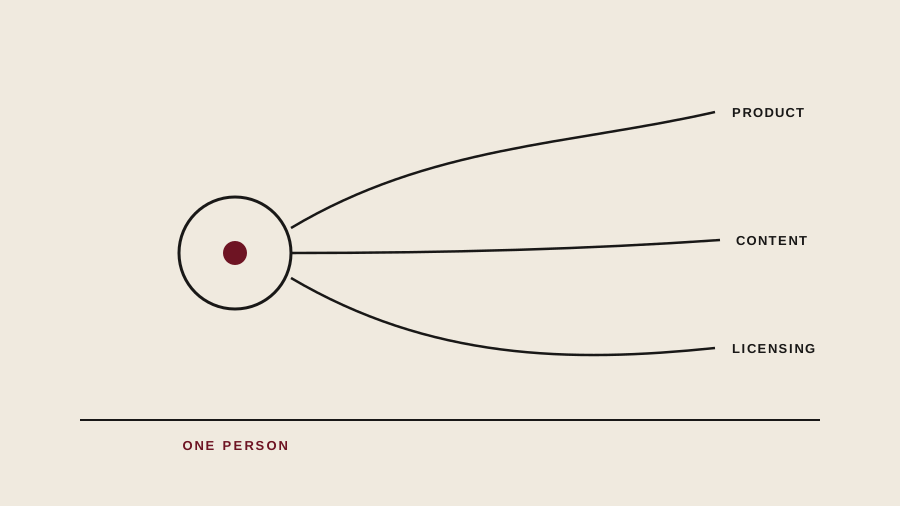
Every solo brand begins as the same company: one person, one audience, one channel. The interesting question is what happens next — and it turns on a single structural issue: which revenue lines can run without the founder in the room?
Three lines, three fates
Personal content is the most visible line and the least scalable: it is priced in the founder's hours. Product lines scale, because a moisturizer or a notebook does not need its creator present at the point of sale. Licensing scales furthest of all — the brand works while the founder sleeps.
The transition nobody posts about
The brands that crossed over share an unglamorous pattern: at some point, the founder deliberately reduced their own presence in the product. The face became a logo; the taste became a system other people could execute. That transition is painful precisely because the founder's presence is what built the audience — but keeping it central is what caps the company.
- Industry Public interviews and disclosures of creator-founded consumer brands