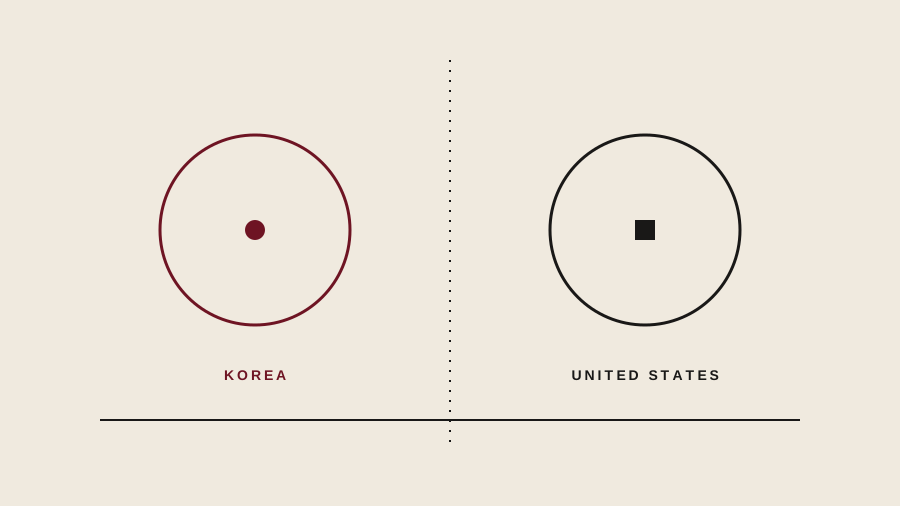
Global brands that misread this difference ship the wrong marketing across the Pacific — and misprice both markets.
- Korean consumer value skews experience-first: what buying says, membership culture, trend velocity.
- American consumer value skews utility-first: what owning does, unbundled pricing, slower but stickier loyalty.
Watch the same global brand launch the same product in Seoul and in Boston, and you will see two different campaigns — or, when a brand gets lazy, one campaign that works in only one of the two cities.
What buying says vs. what owning does
In Korea, the purchase itself carries social information: where you bought, how early, in what packaging. Membership and bundling cultures reinforce it. In the U.S., the dominant question arrives after the purchase: what does owning this actually do for me, per dollar, per use?
Neither market is the naive one
It is tempting — and common — for commentary in each country to frame the other's behavior as irrational. It isn't. Each pattern is a rational response to local market structure: retail density, return policies, social platforms, income volatility. The brands that succeed in both markets are the ones that translate their value story rather than copying it.
The mistake is treating one of these as sophisticated and the other as naive. They are two rational answers to two different market structures — and the brands that win in both are the ones that translate, not copy.
- Field Author's comparative retail notes, Seoul and Boston